
Flat Earth Nerd

Atmosphere & Firmament Structure

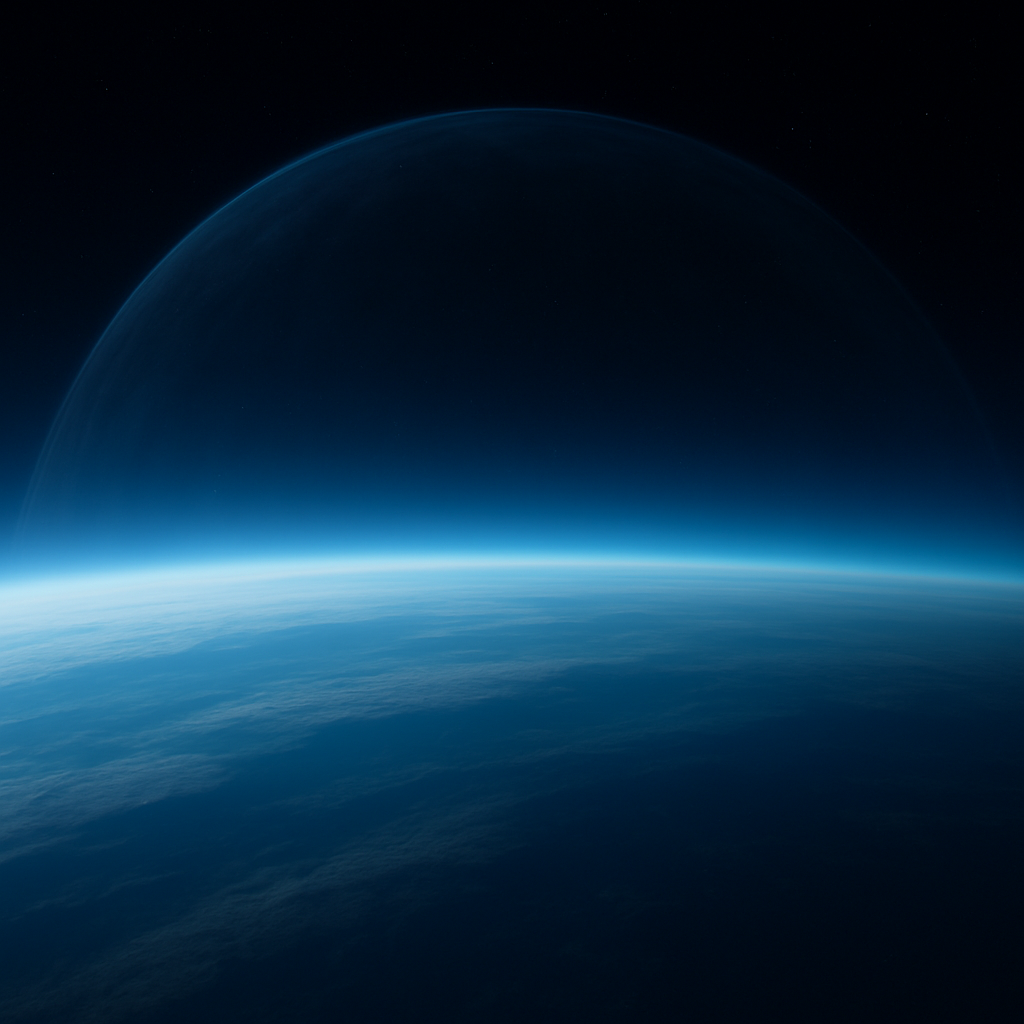
Sealed Dome or Open Space?

Explores whether the sky is capped by a solid/energetic firmament or transitions into open space as described by mainstream physics. ?? Model.Debate.Description

Focus

Is there a physical barrier above us or a continuous vacuum of space?

Tags

firmament · atmosphere · vacuum · pressure · cosmology

Sealed Dome or Open Space?

Debate summary

Flat-earth proponents often claim a sealed dome or firmament prevents the atmosphere from escaping and separates our world from a vacuum or waters above. Scientists argue that pressure gradients, gravity, and gas behavior explain how the atmosphere can exist next to space without a hard barrier. This debate examines pressure, altitude records, rocket footage, and high-altitude balloon data to ask whether evidence better fits a closed system under a dome or an open system merging into space.

Related links

Questions & answers

How can you have 14.7 psi air pressure next to a near-perfect vacuum with no solid barrier in between?

Flat Earth stance

By the gas law, pressure needs a container. We all know you can’t bolt a vacuum chamber to open air without a wall in between. Saying the atmosphere sits next to a vacuum with no physical boundary violates basic containment logic. Show a small-scale experiment where a gas at 1 atm sits stably next to a vacuum without a barrier.

Scientist stance

The atmosphere is the ‘contained’ gas, and gravity plus the planet’s mass provide the effective boundary. Pressure decreases smoothly with altitude, as measured by barometers, radiosondes, and aircraft. There is no sharp interface; instead, density and pressure fall off exponentially until individual gas molecules are so sparse that we call it space.

Rebuttal

Gravity is a force, not a container wall. In every lab test, gas next to a vacuum needs a physical boundary or it rushes out until equilibrium. If your model can’t be demonstrated on any scale—gas at 1 atm adjacent to vacuum with no wall—then invoking gravity is just a story, not empirical containment. Where is the repeatable tabletop experiment that reproduces your claimed boundary-less pressure gradient?

If there’s no dome, why do high-altitude balloons and amateur rockets never show a clear transition point where air ends and space begins?

Flat Earth stance

We have countless amateur balloon and rocket videos up to 30–40 km showing blue sky above, no stars, and no visible edge to anything. If space is a hard vacuum starting around 100 km, we should see some distinct visual transition or sharp boundary. Instead, it just looks like a ceiling of haze. That’s consistent with a dome, not an open gradient into space.

Scientist stance

The transition to space is gradual, not a hard edge. Even at 40 km there is still atmosphere scattering sunlight, so the sky remains blue and stars are washed out. Instruments on sounding rockets and satellites measure decreasing density and pressure with altitude, matching gas-kinetic models. The Kármán line is a practical definition, not a physical wall.

Rebuttal

You’re appealing to instruments and models, but visually and experimentally we never see this supposed smooth fade into vacuum—just a limit to how high we can go and a persistent, opaque sky. If the boundary is truly gradual, specify the altitude and measured pressure where you claim air is effectively gone, and show independent, non-agency data and raw telemetry that anyone can replicate, not just trust.

How do you explain meteors and ‘re-entering’ spacecraft if a sealed dome or firmament exists above us?

Flat Earth stance

If there’s a firmament, so-called meteors could be energetic phenomena or debris interacting with that barrier, not rocks from outer space. ‘Re-entry’ footage is always from government or corporate sources with clear conflicts of interest. We never see a continuous, uncut shot from space to ground by independent operators. Until we have falsifiable, third-party evidence, I’m not compelled to accept the open-space narrative.

Scientist stance

Meteors are consistent with objects entering the upper atmosphere at high velocity, heating by compression and friction, and burning up. Their spectra match known minerals. Re-entry vehicles are tracked by radar, optical telescopes, and ground observers across multiple countries. The physics of hypersonic heating, plasma sheaths, and deceleration have been tested in wind tunnels and match observed telemetry.

Rebuttal

You’re stacking institutional claims—radar, spectra, telemetry—without independent, raw, end-to-end evidence. A firmament model can also predict luminous streaks when high-energy particles or objects hit a barrier. To distinguish models, we’d need open-source tracking, uncut multi-angle footage, and public re-entry hardware that can be inspected. Until then, your explanation is underdetermined by the data and doesn’t rule out a dome.

If space is an open vacuum, why don’t we observe continuous atmospheric loss that would quickly strip Earth of its air?

Flat Earth stance

Gas expands to fill available volume. If an infinite vacuum is above us, molecules at the top should escape relentlessly. Over billions of years, we shouldn’t have a dense atmosphere left. Saying ‘gravity holds it’ ignores that thermal motion gives molecules escape velocities. A sealed system under a dome naturally preserves pressure without invoking fine-tuned long-term balance.

Scientist stance

We do observe atmospheric escape—hydrogen and helium leak into space, and this is measured. Heavier gases are largely retained because their average thermal speeds are far below escape velocity. Gravity creates a potential well; only the high-energy tail of the velocity distribution escapes. Models of Jeans escape and non-thermal loss match observed composition changes and exosphere measurements.

Rebuttal

You’re leaning on long timescales and unobservable histories. In the present, we can’t directly watch molecules leaving into a vacuum; we just infer it from models and spectra. A dome model also predicts selective leakage or interaction at high altitude without requiring an unbounded vacuum. To favor your model, show present-day, direct, lab-like measurements of gas actually escaping into space, not just theoretical distributions and remote sensing.

Why can’t we independently verify the claimed vacuum of space with direct, open-source experiments rather than relying on agency-controlled data?

Flat Earth stance

If space is a near-perfect vacuum, that’s a bold physical claim. Yet all ‘measurements’ of that vacuum come from space agencies or tightly controlled labs. A genuine scientific claim should be testable and falsifiable by independent groups. Where is the open-source, community-run experiment that directly measures the pressure above, say, 100 km, with raw data publicly streamed and hardware publicly inspected?

Scientist stance

High-altitude sounding rockets, university-led satellite missions, and even some student CubeSats measure particle densities and pressures consistent with high vacuum. Their designs, data, and code are often published. Ground-based observations of satellite drag, orbital decay, and radio propagation also indirectly confirm a very low-density environment above the atmosphere.

Rebuttal

University and CubeSat projects still depend on the same launch infrastructure, tracking networks, and regulatory gatekeepers as space agencies. That’s not independent in the sense of community-level falsifiability. A dome proponent can reasonably ask for a fully transparent experiment: open hardware, open funding, independent launch, and real-time raw data. Until such a test is done, the ‘open vacuum of space’ remains a model, not a directly verified, universally reproducible measurement.